Thursday, March 13, 2008

Jujutsu


Jujutsu was never a martial art. It is originally a term for the soft skill techniques. It was not until the Japanese traditional arts came to the Americas that Jujutsu/Jujitsu became a martial art's name as in the instance of "Brazilian Jiujitsu". Before then there existed no Jujutsu/Jujitsu schools in Japan.

Brazilian Jiu Jitsu is a derivation of Judo, and has no direct link to Japanese Jujutsu. The derivation from Judo to BJJ was originally done by Helio Gracie, to accomodate his small, weak and fragile frame.

Since then, many practicioners have made various adaptions to Brazilian Jiu Jitsu and blended with other martial arts.

Jujutsu (柔術 jūjutsu?) listen , literally meaning the "art of softness", is a Japanese martial art consisting primarily of grappling techniques. Jujutsu evolved among the samurai of feudal Japan as a method for dispatching an armed and armoured opponent in situations where the use of weapons was impractical or forbidden. Due to the difficulty of dispatching an armored opponent with striking techniques, the most efficient methods for neutralizing an enemy took the form of pins, joint locks, and throws. These techniques were developed around the principle of using an attacker's energy against him, rather than directly opposing it, and came to be known as jujutsu.[1]

There are many variations of the art, which leads to a diversity of approaches. Jujutsu schools (ryū) may utilize all forms of grappling techniques to some degree (i.e. throwing, trapping, joint locking, holds, gouging, biting, disengagements, striking, and kicking). In addition to jujutsu, many schools taught the use of weapons.

Today, jujutsu is still practiced both as it was hundreds of years ago, but also in modified forms for sport practice. Derived sports forms include the Olympic sport and martial art of judo, which was developed from several traditional styles of jujutsu by Kano Jigoro in the late 19th century; and Brazilian Jiu-Jitsu, which was in turn derived from judo.

History


Origins

Jujutsu was first developed by Samurai. Fighting forms have existed in Japan for centuries. The first references to unarmed combat arts or systems is in the earliest purported historical records of Japan, the Kojiki (Record of Ancient Matters) and the Nihon Shoki (Chronicles of Japan), which relate the mythological creation of the country and the establishment of the imperial family. Other glimpses can be found in the older records and pictures depicting sumai (or sumo) no sechie, a rite of the Imperial Court in Nara and Kyoto performed for purposes of divination and to help ensure a bountiful harvest.

There is a famous story of a warrior Nomi no Sekuni of Izumo who defeated and killed Tajima no Kehaya in Shimane prefecture while in the presence of Emperor Suinin. Descriptions of the techniques used during this encounter include striking, throwing, restraining and weaponry.

The term "jūjutsu" was not coined until the 17th century, after which time it became a blanket term for a wide variety of grappling-related disciplines. Prior to that time, these skills had names such as "short sword grappling" (小具足腰之周 kogusoku koshi no mawari?), "grappling" (組討 or 組打 kumiuchi?), "body art" (体術 taijutsu?), "softness" (柔 or 和 yawara?), "art of harmony" (和術 wajutsu?), "catching hand" (捕手 torite?), and even the "way of softness" (柔道 jūdō?) (as early as 1724, almost two centuries before Kano Jigoro founded the modern art of Kodokan Judo).[2]

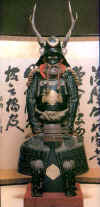
These systems of unarmed combat began to be known as Nihon koryu jūjutsu (Japanese old-style jujutsu), among other related terms, during the Muromachi period (1333-1573), according to densho (transmission scrolls) of the various ryuha (martial traditions) and historical records. Most of these were battlefield systems to be used with the more common and vital weapon systems. These fighting arts had various names, including kogusoku, yawara, kumiuchi, and hakuda, all under the general description of Sengoku jūjutsu. They were not systems of unarmed combat, but means for an unarmed or lightly armed warrior to fight a heavily armed and armored enemy on the battlefield. Ideally, the samurai would be armed and would not need to rely on them.

Methods of combat (as just mentioned above) included striking (kicking and punching), throwing (body throws, joint-lock throws, unbalance throws), restraining (pinning, strangulating, grappling, wrestling) and weaponry. Defensive tactics included blocking, evading, off-balancing, blending and escaping. Minor weapons such as the tanto (dagger), ryufundo kusari (weighted chain), kabuto wari (helmet smasher), and kakushi buki (secret or disguised weapons) were almost always included in Sengoku jujutsu.

Development

In later times, other koryu developed into systems more familiar to the practitioners of Nihon jujutsu commonly seen today. These are correctly classified as Edo jūjutsu (founded during the edo period): they are generally designed to deal with opponents neither wearing armor nor in a battlefield environment. Most systems of Edo jujutsu include extensive use of atemi waza (vital-striking technique), which would be of little use against an armored opponent on a battlefield. They would, however, be quite valuable in confronting an enemy or opponent during peacetime dressed in normal street attire (referred to as "suhada bujutsu"). Occasionally, inconspicuous weapons such as tantō (daggers) or tessen (iron fans) were included in the curriculum of Edo jūjutsu.

Another seldom seen historical side is a series of techniques originally included in both Sengoku and Edo jujutsu systems. Referred to as hojo waza (捕縄術 hojojutsu, nawa jutsu, hayanawa and others), it involves the use of a hojo cord, (sometimes the sageo or tasuke) to restrain or strangle an attacker. These techniques have for the most part faded from use in modern times, but Tokyo police units still train in their use and continue to carry a hojo cord in addition to handcuffs. The very old Takenouchi-ryu is one of the better-recognized systems that continue extensive training in hojo waza. Since the establishment of the Meiji period with the abolishment of the Samurai and the wearing of swords, the ancient tradition of Yagyu Shingan Ryu (Sendai & Edo lines) has focused much towards the jujutsu (Yawara) contained in it's syllabus.

Many other legitimate Nihon jujutsu ryu exist but are not considered koryu (ancient traditions). These are called either Gendai jūjutsu or modern jujutsu. Modern jūjutsu traditions were founded after or towards the end of the Tokugawa period (1868), when more than 2000 schools (ryu) of jūjutsu existed. Various traditional ryu and ryuha that are commonly thought of as koryu jujutsu are actually gendai jūjutsu. Although modern in formation, very few gendai jujutsu systems have direct historical links to ancient traditions and are incorrectly referred to as traditional martial systems or ryu. Their curriculum reflects an obvious bias towards Edo jūjutsu systems as opposed to the Sengoku jūjutsu systems. The improbability of confronting an armor-clad attacker is the reason for this bias.

Over time, Gendai jujutsu has been embraced by law enforcement officials worldwide and continues to be the foundation for many specialized systems used by police. Perhaps the most famous of these specialized police systems is the Keisatsujutsu (police art) Taiho jutsu (arresting art) system formulated and employed by the Tokyo Police Department.

If a Japanese based martial system is formulated in modern times (post Tokugawa) but is only partially influenced by traditional Nihon jujutsu, it may be correctly referred to as goshin (self defense) jujutsu. Goshin jujutsu is usually formulated outside Japan and may include influences from other martial traditions. Brazilian Jiu-Jitsu, which was developed from Judo, but with with greater emphasis on ground grappling (ne waza), is an excellent example of Goshin Jujutsu.

Jujutsu techniques have been the basis for many military unarmed combat techniques (including British/US/Russian special forces and SO1 police units) for many years.

There are many forms of sport jujutsu, the original and most popular being judo, now an Olympic sport. One of the most common is mixed-style competitions, where competitors apply a variety of strikes, throws, and holds to score points. There are also kata competitions, where competitors of the same style perform techniques and are judged on their performance. There are also freestyle competitions, where competitors take turns attacking each other, and the defender is judged on performance.

Description

Japanese jujutsu systems typically place more emphasis on throwing, immobilizing and pinning, joint-locking, choking, and strangling techniques (as compared with other martial arts systems such as karate). Atemi-waza (striking techniques) were seen as less important in most older Japanese systems, since samurai body armor protected against many striking techniques. The Chinese quanfa/ch'uan-fa (kenpo or kung fu) systems focus on punching, striking, and kicking more than jujutsu.

The Japanese systems of hakuda, kenpo, and shubaku display some degree of Chinese influence in their emphasis on atemi-waza. In comparison, systems that derive more directly from Japanese sources show less preference for such techniques. However, a few jujutsu schools likely have some Chinese influence in their development. Jujutsu ryu vary widely in their techniques, and many do include significant numbers of striking techniques, if only as set-ups for their grappling techniques.

In jujutsu, practitioners train in the use of many potentially fatal moves. However, because students mostly train in a non-competitive environment, risk is minimized. Students are taught break falling skills to allow them to safely practice otherwise dangerous throws.

In jujutsu, there are five main sectors ("arts") of training. The first, the Art of Blocking, is used to defend against attacks. The second, the Art of the Fulcrum Throw, is employed in modern judo. The third, the Art of the Non-fulcrum Throw is employed through throws that involve little or no contact with the opponent. The fourth, the Art of Escaping (Hakko-Dori), is very crucial in many styles of Jujutsu. The fifth, the Art of Striking (Atemi-Waza), is used more by modern jujutsuans who do not employ body armor.

Technical characteristics

Although there is some diversity in the actual look and techniques of the various traditional jujutsu systems, there are significant technical similarities common to all schools:

  • Students learn traditional jujutsu primarily by observation and imitation of the ryu's waza.
  • The unarmed waza of most schools emphasize joint-locking techniques (kansetsu waza), that is, threatening a joint's integrity by placing pressure on it in a direction contrary to its normal function, aligning it so that muscular strength cannot be brought to bear, take-down or throwing techniques, or a combination of take-downs and joint-locks.
  • Sometimes atemi (strikes) are targeted to some vulnerable area of the body; this is an aspect of kuzushi, the art of breaking balance as a set-up for a lock, take-down or throw.
  • Movements tend to capitalize on an attacker's momentum and openings in order to place a joint in a compromised position or to break their balance as preparation for a take-down or throw.
  • The defender's own body is positioned so as to take optimal advantage of the attacker's weaknesses while simultaneously presenting few openings or weaknesses of its own.
  • Weapons training was a primary goal of Samurai training. Koryu (old/classic) schools typically include the use of weapons. Weapons might include the roku shaku bo (six-foot staff), hanbo (three-foot staff), katana (long sword), wakizashi or kodachi (short sword), tanto (knife), or jitte (short one hook truncheon).
  • Old schools

    Circa 1600 AD there were over 2000 ryu (schools) of jujutsu in Japan and there were common features that are characterised of most of them. The technical characteristics varied from school to school. Many of the generalizations noted above do not hold true for some schools of jujutsu. Old schools of Japanese jujutsu include:

  • Araki-ryu
  • Daito-ryu aiki-jujutsu
  • Hontai Yoshin-ryu
  • Sekiguchi Shinshin-ryu
  • Sosuishitsu-ryu
  • Takenouchi-ryu
  • Tatsumi-ryu
  • Tenjin Shinyo-ryu
  • Yagyu Shingan Ryu
  • Yoshin Ryu

Kendo


Japanese KENDO ("way of the sword"), traditional Japanese style of fencing with a two-handed wooden sword, derived from the fighting methods of the ancient samurai (warrior class).

The unification of Japan about 1600 removed most opportunities for actual sword combat, so the samurai turned swordsmanship into a means of cultivating discipline, patience, and skill for building character.

In the 18th century, practice armour and the shinai, a sword made of bamboo, were introduced to allow realistic fencing without risk of injury. The study of what came to be known as kendo was even compulsory in Japanese schools from time to time.An All-Japan Kendo Federation was formed following the end of the occupation in 1952, and an International Kendo Federation was founded in 1970.

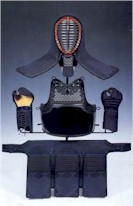
Kendo matches take place in an area 9 to 11 m (about 30 to 36 feet) square. Contestants wear the traditional uwagi (jacket), hakama (long divided skirt), do (chest protector), tare (waist protector), men (mask), and kote (padded gloves). The shinai varies from 43 to 46 inches (110 to 118 cm) in length and is made of four lengths of seasoned bamboo bound by waxed cord. All blows use the "cutting" edge of the shinai, though this is not sharp. The shinai is usually held with both hands.

Points are awarded for blows delivered upon the left side, right side, or top of the head; the right or left wrist; the right or left side of the trunk; and for a thrust to the throat. These are the only scoring areas. The name of the point struck must be called out simultaneously by the attacker with his blow and is verified by judges. A contest is won by the first combatant who scores two points.

Kendo is widely practiced among students (required in high schools), police, and military groups in Japan and to a lesser extent in the United States, Canada, Great Britain, and Brazil.

Kendo, is the art of Japanese fencing. "Ken" or tsurugi is from the character meaning sword. The character for "Do" or michi includes the meaning way or path which translates as "The way of the sword". A path in life which is followed through the training of kendo.


Kendo, the Way of the Sword is the art of Japanese Samurai Swordsmanship. It is rooted in the traditions of Budo, the Martial Way. It is both exhilarating and demanding to learn.

In these pages we'd like to provide some information about Kendo and Kendo in the United States.

Origin of Kendo

Modern Kendo bears but faint resemblance to Kenjutsu and to its feudal origins of sword wielding samurai warriors which are today depicted in movies and television. Kendo, literally translated, "the way of the sword," cannot be traced to a single founder or given an exact founding date. The story of the rise of modern Kendo begins with the samurai and extends over the culture of several centuries.

By the end of the 12th century, the authority of the Japanese central government had declined. Bands of warriors grouped together for protection forming local aristocracies. Feudalism had come of age, and was to dominate Japan for several centuries. With the establishment of the Shogun in Kamakura and military rule controlling Japan, a new military class and their lifestyle called Bushido, "the way of the warrior," gained prominence. Bushido stressed the virtues of bravery, loyalty, honor, self discipline and stoical acceptance of death. Certainly, the influence of Bushido extended to modern Japanese society and Kendo was also to be greatly influenced by this thinking.

The Japanese warrior had no contempt for learning or the arts. Although Kenjutsu, "the art of swordsmanship," had been recorded since the 8th century, it gained new prominence and took on religious and cultural aspects as well. Sword making became a revered art. Zen and other sects of Buddhism developed and the samurai often devoted time to fine calligraphy or poetry.

The next great advance in the martial arts occurred during the late Muromachi period (1336-1568) often call the "age of Warring Provinces" because of the many internal conflicts. This period brought an increased demand and respect for men trained in the martial arts. Consequently, many schools of Kenjutsu arose, eventually numbering about 200. Each was taught by a famous swordsman whose techniques earned him honor in battle. Real blades or hardwood swords without protective equipment were used in training resulting in many injuries. These schools continued to flourish through the Tokugawa period (1600-1868), with the Ittoryu or "one sword school," having the greatest influence on modern Kendo.

Kendo began to take its modern appearance during the late 18th century with the introduction of protective equipment: the men, kote and do and the use of the bamboo sword, the shinai. The use of the shinai and protective armor made possible the full delivery of blows without injury. This forced the establishment of new regulations and practice formats which set the foundation of modern Kendo.

With the Meiji Restoration (1868) and Japan's entry into the modern world, Kendo suffered a great decline. The Samurai class was abolished and the wearing of swords in public outlawed. This decline was only temporary, however, interest in Kendo was revived first in 1887 when uprisings against the government showed the need for the training of police officers. Later the Sino-Japanese War (1894-95) and the Russo-Japanese War (1904-05) again encouraged an awareness of the martial spirit.

Consequently in 1895, the Butokukai, an organization devoted to the martial arts was established. In 1911, Kendo was officially introduced into the physical education curriculum of middle schools and in 1912, the Nihon Kendo Kata, a set of regulations for Kendo, was published. In 1939 as Japan prepared for war, Kendo became a required course for all boys.

After Would War II, because of its nationalistic and militaristic associations, Kendo was outlawed and the Butokukai was disbanded. However by 1952, supporters of Kendo successfully reintroduced a "pure sport" form of Kendo, called Shinai Kyogi which excluded the militaristic attitudes and some of the rougher aspects of practice characteristic of prewar Kendo, into the public schools. Today, Kendo continues to grow under the auspices of the All Japan Kendo Federation, the International Kendo Federation, and federations all over the world.

Although the outward appearance and some of the ideals have changed with the changing needs of the people, Kendo continues to build character, self-discipline and respect. Despite a sportlike atmosphere, Kendo remains steeped in tradition which must never be forgotten. For here lies the strength of Kendo which has carried it throughout history and will carry it far into the future.

Kendo Equipment

Kendo equipment consists of the swords, uniform and armor. There are two types of wooden swords used. First, the bokken or bokuto, a solid wood sword made of oak or another suitable hardwood. The bokken is used for basics and forms practice (kata). Second, the shinai, is made up of four bamboo staves and leather. The shinai is used for full contact sparring practice. The uniform or dogi consists of woven cotton top called a keikogi and pleated skirt-like trousers called a hakama. The armor or bogu consists of four pieces: the helmet (men), the body protector (do), the gloves (kote), and the hip and groin protector (tare). Modern Kendo armor design is fashioned after the Oyoroi of the Samurai.

Kendo Practice

A Kendo practice is composed of many types of training. Each type has a different purpose for developing the Kendo student.

Kendo, like other martial arts requires discipline and a dedication to training. A new student begins with learning the basics such as: etiquette (reigi), different postures and footwork, and how to properly swing a sword. The student progresses through a series of skills preparing them to begin training with armor (bogu).

Once a student begins to practice in armor, a practice may be composed of any or all of the following types of practice and this will depend upon what the instructor's focus is at a particular time:

  1. Kiri-Kaeshi: successively striking the left and right men, practice centering, distance, and proper cutting while building spirit and stamina.
  2. Waza-Geiko: technique practice in which the student learns to use the many techniques of Kendo with a receiving partner.
  3. Kakari-Geiko: short, intense, attack practice which teaches continuous alertness, the ability to attack no matter what has come before, as well as building spirit and stamina.
  4. Ji-Geiko: sparring practice where the kendoist has a chance to try all that he or she has learned with a resisting partner.
  5. Gokaku-Geiko: sparring practice between two kendoist of similar skill level.
  6. Hikitate-Geiko: sparring practice where a senior kendoist guides a junior kendoist through practice.
  7. Shiai-Geiko: competition matches which are judged on the basis of a person scoring valid cuts against an opponent.

Kendo Kata

Almost all martial arts have a set of kata. Kendo is no exception. Kata are pre-set sequences of motions which illustrate very deeply one or more aspects of the art. Repetitive practice of kata internalizes the lessons of the kata.

Kendo kata are practiced with a solid wooden sword called a bokken. There are ten kendo kata specified by the All Japan Kendo Federation. Each kata studies a single set of concepts in a very pure setting allowing the practitioner to delve deeply into these concepts.

Kendo kata are practiced between two people, the Uchitachi and the Shidachi. In kendo kata, the Uchitachi attacks the Shidachi who in turn demonstrates a proper response to the attack. Seven of these kata are illustrations of the technique of the long sword against the long sword. The last three kata illustrate the short sword defending against attacks by the long sword.

Prior to the invention of the shinai and bogu, kata were the only way that kendoists could safely practice. Originally, the role of Uchitachi was taken by the teacher and the role of Shidachi by the student. This tradition carries over into modern Kendo kata in that the Uchitachi always sets the pace and distance at which the actions are performed.

Kendo Philosophy

No attempt will be made here to present the philosophy of Kendo. Each Dojo will have similar but sightly different ideas of what Kendo should be. The student must discover through their Dojo and themselves what this is. The All Japan Kendo Federation Kendo has presented a Meaning of Kendo.

KENDO/SHIAI GLOSSARY

Age-kote - when the kote is held above the pit of the stomach
while executing a strike.

Aiuchi - when both opponents make datotsu simultaneously.

Bassoku - a penalty for an infraction or foul.

Bogu - kendo equipment.

Chudan-no-kamae - the basic ready position with the shinai pointed
at the opponents mid-upper section.

Chui - a warning. The first chui is without penalty, afterwards
they shall be considered penalties.

Chuken - the third contestant in a team match.

Chusen - a winner selected by lot among the judge(s) or referees.

Chusen gachi, shobu-ari - a winner by lot (draw).

Daihyoshu-sen - playoff by representatives in a team match.

Do - the torso protector. Can be made of bamboo or other material.

Encho - an overtime or extension round in a match. Used to determine
a winner when no points are scored during the normal match time period.

Fukusho - the fourth contestant in a team match.

Fusei-shinai shiyo - the use of an illegal shinai for a match.

Fusen-gachi - a winner as the result of a "no-show."

Fuho-koi-shobu-ari - a winner resulting from a player's illegal act.

Gogi - a consultation by the referees. Generally made when a time out is
called during a match.

Go-No-Waza (Datotsu) - a parry to a valid datotsu made from Tsuba-zeri-ai.

Hajime - the command start a match.

Hakama - the pleated pantaloons or skirt.

Hantei - a decision made by the judge or referee for a winner.

Hantei gachi, shobu-ari - a winner by decision.

Hansoku - a foul play or illegal act. Hansokus are the following:

-ashi-kake or ashi-barai - tripping or sweeping an opponent
off their feet.

-kosei-o-gaisuru-koi - an illegal act or move.

-jyogai - stepping outside the court line.

-oshidashi or tsukidashi - unfair pushing or shoving an
opponent out of bounds.

-shinair hanashi - dropping a shinai.

-tsuba-zeri-ai - stalling at tsuba-zeri-ai without any
intention of executing a datotsu.

Hasso-no-kamae - the ready position with the shinai held
vertically by the right shoulder.

Hikiwake - a draw decision in a match.

Igi - a protest; generally done by a team manager immediately
after the match in quesiton.

Ippon gachi, shobu-ari - a winner by a single point in a match.

Jiho - the second contestant in a team match.

Jikaku-mushi - an insult made to a player or referee.

Jodan-no-kamae - the ready position with the shinai held over the head.


Jogai - stepping out of bounds during a match.

Kamae - the basic forward standing guard position.

Kakari - the court staff consisting of:

-keiji gakari - scoreboard recorder.

-kiroku gakari - score recorder.

-senshu gakari - court announcer.

- tokei gakari - time keeper.
Keikogi - the cotton jacket worn under the do.

Kendo-gu - the equipment used and worn by a kendoist.
Also referred to as Bogu.

Kote - fencing gloves.

Men - the head gear or "helmet/mask."

Nihon me - the command to restart a match for the second match point.

Nito - using two shinai, short and long.

Nito-no-kamae - the ready position when using two shinai.

Rei - a bow.

Ritsu-rei - a bow at the standing position.

San-Bon-Shobu - three point scoring in a normal shiai or match.

Sageto - holding the shinai at the left side of the body.

Senpo - the first contestant in a team match.

Shiai-funo - a winner when one of the opponents cannot continue the match.

Shiai-kyohi - a match winner called when there is a
refusal or discontinuation of the match.

Shinai - a four piece bamboo or fiberglas sword used for
practise and shiai. It must meet minimum weight and length
specifications as noted for age and class group.

- chigiri - the metal spacer in the shinai's hilt
which keeps the four bamboo staves from slipping
forward or backward.

- datotsu-bu - the tip portion of the shinai which
must make contact for a valid point or yuko datotsu.

- ken-sen - the front "tip" of a shinai.

- jin-bu - the portion from the tsuba to the front tip
of the shinai.

- nakayui - the leather wrap at the front third of a
shinai. It keeps the bamboos stave from separating.

- saki-gawa - the leather covering at the tip of the shinai.

- shin - the rubber spacer placed at the inside
front tip of a shinai.

- tsuka - the handle portion of the shinai.

- tsuka-gashira - the bottom or handle end of a shinai.

- tsuba - the hilt guard on the shinai. May be made
of leather, rubber or synthetic. It must not
pass over the Tsuka-gawa or leather handle.

- tsuru - the string or "himo" that holds the nakayui
and tuska-gawa together and keeps the four bamboo staves tight.

Shinai-hanashi - dropping a shinai during a match.

Shinpan - a referee.

Shinpancho - the chief judge overseeing all court actions.

Shinpan Shunin - the chief court judge who assists the
chief judge during a match.

Shinpan-in - the team of referees in a court. The team
consists of the Shu-shin (the chief referee) and two
Fuku-shin (subreferees).

Shobu - the command to restart a match for the match point.

Shobu-ari - announces a winner in a match.
Son-kyo - the crouching position taken just before and after a match.

Sosai - an offset when two players commit a foul as the
same time and the fouls are offset - no penalty.

Tabi - footwear.

Taisho - the last contestant in a team match.

Taito - holding the shinai at waist level.

Tare - the waist protector.

Tsuki - the throat thrust or hit.

Tsuki-tare - the throat protector on the men.

Wakki-gakame - ready position with the shinai downward
and near the right foot.

Yame - the command to stop.

Yuko Datotsu - a valid strike or point. Must combine
correct call, execution and follow through.

Zan-shin - the follow through of a strike, a state of energy,
execution, and alertness against an opponent.

Zekken - the name tag, made of cloth or leather and attached to the Tare.

Funny videos/ Action Videos OF KARATE

FUNNY VIDEO CLICK HERE

ACTION VIDEO CLICK HERE

WATCH & ENJOY

GOOD ASPECTS

As it is said Martial arts / Karate is a religion in itself.
A karateka or a martial artist must know

  1. Never attack first, always remember karate always starts with a block.

  2. karate is not just a physical and mental art, it requires a good soul / spirit.

  3. A good martial artist always keeps his / her patience or tolerance level high.

  4. Respect every living thing.

  5. Follow the way of peace.

  6. Believes in god and everything made by god.

  7. Humanity.

  8. Follow the proper way of justice.

  9. If you fight for good your power is twice as you are.

  10. If you fight for nothing your power is half as you are.

  11. First know yourself then know others.

KARATE FOR ALL

Karate Is The Best Thing You Can Do For Your Child and yourself
Greater academic achievement. Unshakable self respect. Increased strength and fitness in body, mind and soul.
"Martial Arts are less about your child learning to fight others, and more about fighting…himself. His innermost fears. Conquer them, and your child unleashes within himself a powerful, unstoppable force. "

"A force that gives him the strength to kick down the doors of his own self doubts, A force that opens your child to the exalting power of values."

We are conducting Specialized training programs in Delhi for the all round development of its participants.

And all of it comes while learning how to “kick, block, and punch.” Look at it this way. Your child’s first and biggest challenge comes not from “fighting for his rights on the street,” or “beating up the neighborhood bully.” It comes, instead, from battling more sinister forces. Your child’s own fears and self doubts:

“I’m not as smart as Manish.”

“I don’t get what my teacher is saying.”

“I wish I was as [strong, pretty, tall] as Rahul.”

“Why does Rohan keep giving me a bad time?”

“Why can’t I be as popular as Ajay?”

The question is, how do you get your child to fight these demons? You know the problem. Your child has a tough time even telling you He / she’s haunted by them. Never mind how she / he might conquer them.

Well, the good news is, We have a proven solution. A program that has already worked. A series of lessons your child can learn easier than you think.

In other words, when your child uses the discipline of karate to conquer his fears, he has power to transfer that discipline to all other areas of his life. I know of no other sport that does this better than karate.

Now, you may be asking, how does all this “values” stuff work? And why does karate manage to do a better job teaching it?

Again, more than any other sport, Karate gives your child the chance to explore her innate powers. She’ll marvel (as you will) as she increases in strength, flexibility endurance, balance, and harmony. Yet this is only the start.

In fact, her physical skills act as a foundation for something much more important: the development of her value skills, mental and spiritual. And not cut off from her physical skills, but intimately connected - even bonded-to them.

Like this:

Strong Courage
Your child finds the courage to move outside of his comfort zone. He wills himself to take on more difficult karate moves and skills. He becomes no longer afraid of being afraid.

As he does so, he learns that whatever he sows, so he reaps. He learns to blame no one, but himself. He suddenly sees his life as a constant, never-ending journey of life-giving improvement.

In short, with a deep breath, he refuses to become a victim of fate. He puts an arm lock on his own destiny.

Staying power
Your child finds joy in improving her physical stamina. She can walk farther, run longer, practice skills until she gets them right.

In turn, she learns not to give up. She sticks things out. With the help of her teachers, she strives harder, longer to reach her goals. Even if she fails she perseveres. She won’t let her self doubts get in the way of finding ultimate solutions.

As the man said, “Where performance is measured, performance improves.” Yet, your child has to first accept where he stands now. That means measuring current strengths. Above all, he learns that to succeed, he can’t fool anyone, especially himself.

This results in a keener focus. He learns to make eye contact with his teacher (and not just in karate.) He pays greater attention to what each teacher says. He knows and accepts where he stands.

Powerful Self Control
She’ll refuse to give in to negative peer pressure. She’ll have deeper respect for rules.

Improved Focus

She’ll learn what’s needed, along with the skill to “zero in” on critical tasks at hand. Normal, yet time-wasting, childhood distractions won’t get in her way.

Fearless Self Confidence
Watch as your child finds the courage to open any door life has to offer.

SELF DEFENCE FOR WOMEN

Special Self Defence Classes for women
Self DefenceFor the past tree months crime against women in Delhi is rapidly increasing to an alarming situation. we received many enquires and phone calls for developing such a special self defense program for women in Delhi.

We have introduced Special Self Defence program for women in Delhi. From a school going girl to a typical housewives or working girl anyone can learn a set of Defensive techniques specially selected and developed by our professionals. This art is mixed Martial Art (Known as MMA) it is basically developed from Army's UAC (Unarmed Combat), Karate, Judo, Kenpo, Jujitsu, Tai Chi, Taekwondo, Wushu / Kung Fu. Very effective method of Self Defense.

"These techniques can crack the bones of a person in seconds"

Besides all these techniques the MOST IMPORTANT part is to prepare the mind to be stable at all situations at all the times. that could be achieved by giving a brief theory. It has been observed that a persons with a strong body and excellent skills fails to defend themselves because their mind stops working in these kind of situations. it is very commonly seen in women.
The three major reasons women are easy targeted
  1. Self Defence 3 Lack of Awareness - You MUST know where you are & what's going on around you.

  2. Body Language - Keep your head up, swing your arms, stand straight up.

  3. Wrong Place, Wrong Time - DON'T walk alone in an alley, or drive in a bad neighborhood at night.
Be Aware - Act Smart - Be Safe
  • Self Defence 1Be Aware - Act Smart - Be Safe

  • Don't fight with the attacker or don't try to win just try to escape and avoid the situation you may be hurt badly while fighting or you may loose unless you have a friend's company.

  • Look confident. People can spot a “victim posture” a mile away. Heads up, shoulders back, stand straight, and look those you meet on the trail in the eye.

  • Be alert to the people around you. If they look questionable, move on to another place. Be judgmental.

  • Always keep your distance when walking past strangers on the street or in dark areas.

  • GET A CELL PHONE You better have a cell phone to call for help.

  • If a robber asks for your wallet and/or purse, DO NOT HAND IT HIM. Toss it away from you.... chances are that he is more interested in your wallet and/or purse than you, and he will go for the wallet/purse. RUN IN THE OTHER DIRECTION!

  • Self Defence 3few notes about getting into your car in a parking lot, or parking garage:(1) Be aware: look around you, look into your car, at the passenger side floor, and in the back seat. (2) If you are parked next to a big van, enter your car from the passenger door. Most attack their victims by pulling them into their vans while the women are attempting to get into their cars. (3) Look at the car parked on the driver's side of your vehicle, and the passenger side. If a male is sitting alone in the seat nearest your car, you may want to walk back into the mall, or work, and get a guard/policeman to walk you back out. IT IS ALWAYS BETTER TO BE SAFE THAN SORRY.

  • ALWAYS take the elevator instead of the stairs. (Stairwells are horrible places to be alone and the perfect crime spot).

  • If the predator has a gun and you are not under his control, ALWAYS RUN! The predator will only hit you (a running target) 4 in 100 times; And even then, it most likely WILL NOT be a vital organ. RUN!

SYLLABUS B(elt Levels or Kyu in Karate-Do Shito Ryu)

Belt Levels or Kyu in Karate-Do Shito Ryu

Yellow Belt (7 Kyu)
Senior Yellow Belt (6 Kyu)
Junior Green Belt (5 Kyu)
Senior Green Belt (4 Kyu)
Junior Brown Belt (3Kyu)
Senior Brown Belt (2 Kyu)
Senior Most Brown Belt (1 Kyu)
Blcak Belt Sho Dan

KARATE-DO SYLLABUS AS PER THE ORGANIZATION Stances (Dachi)

Heisoku Dachi
Musubi Dachi
Haiko Dachi

Uchihachiji Dachi
Sotohachiji Dachi
Shiko Dachi
Moto Dachi
Zenkutsu Dachi
Kokutsu Dachi
Nekoashi Dachi
Renoji Dachi
Kosa Dachi


Sanchin Dachi


Fudo Dachi
Feet together, close toe stance
Feet together, open toe stance
Parallel stance
Haiko Dachi toe inward
Haiko Dachi toe outward

Square stance (sitting on Horse stance toe outward)
Forward parallel stance
Forward long stance
Back stance
Cat stance
L stance, heel on one line
Crossed leg stance

Uchihachiji Dachi one step forward

Forward parallel stance

Kicks (Geri)

Hiza Geri

Mawashi Hiza

Mai Hiza

Tobi Hiza
Ken Sokuto Geri
Mawashi Geri
Mika Zuki Geri
Ura Mawashi
Tobi Ura Mawashi

Ushiro Ura Mawashi

Tobi Ushiro Ura Mawashi

Yoko Geri

Tobi Yoko Geri
Mai Geri

Tobi Mai Geri

Ushiro Geri

Tobi Ushiro Geri

Mai- Mawashi

Knee kick
Round Hose Knee

Front Knee attack

Jump Knee attack

Side, knife edge, lower area (knee level) kick
Roundhouse, instep, middle area kick
Crescent Kick
Half Round (hook)
Jump Half Round

Back Round (hook)


Jump Spinning Round (hook)

Side, knife edge, middle area kick
Jumping Side Kick

Front Kick

Jumping Front Kick

Back Thrust

Jumping Back Thrust

Front and roundhouse kick.

Blocks (Uke)

Jodan Age Uke
Jodan Uke

Yoko Uchi

Soto Uke
Wa Uke
Kosa Uke
Kote Uke
Ko Uke

Kake Uke

Yoko Uke
Harai Uke
Shotei Barai
Hiji Uke
Shuto Uke
Gedan Barai

Rising block
Upper Block

Forearm inward block
forearm outward block

Two arm circle block
Crossed arms block
Back of hand block
Wrist block
Inside out, circle block with knife edge of hand


Forearm outward side block
Middle area downward
Palm heel block
Elbow block
Sword hand block
Downward block (when standing)

Hand Techniques (Tsuki / Uchi )

Seiken Tsuki
Jodan Tsuki

Chudan Tsuki

Gidan Tsuki

Nidan Tsuki

Sambon Tsuki

Tateken Tsuki
Uraken Tsuki
Hiraken Tsuki
Morote Tsuki

Age Tsuki
Furi Tsuki
Wa Zsuki
Ipponken
Nukite

Shuto Uchi
Kentsui Uchi
Uraken Uchi
Urashuto
Hijiate
Spear hand
Upper Punch


Middle Punch


Down Punch


Double Punch

Triple Punch

Fore fist thrust
Vertical fore fist thrust
Inverted fore fist thrust
Four knuckle thrust (leopard punch)
Two arm, two level thrust
Rising thrust
Round house thrust
Two arm, horizontal circle thrust
One knuckle thrust

Sword hand (knife edge) strike
Bottom fist strike (hammer fist)
Back knuckle strike
Inverted sword hand (ridge hand)
Elbow smash

TENSHIN HAPPA (Eight Directions of Response)

One Hidari Yoko Right
Two Migi Yoko Left
Three Hidari Ushiro Naname Back Right
Four Migh Ushiro Naname Back Left
Five Ushiro Back
Six Hidari Mai Naname Right Front
Seven Migi Mai Naname Left Front
Eight Mae Front

KATAS

Sai Itch Dosa

Sai Ni Dosa

Sai San Dosa

Sai Yon Dosa

Kata of the People, Basic

Junino

Kata of the People, Basic

Pinan Shodan

Pinan Nidan

Pinan Sandan

Pinan Yondan

Pinan Godan

Peaceful Mind
"Peace & Harmony"

Advanced Katas
More Katas can be practiced in order to participate in the kata championships.

Giksai Itch

attack and smash the enemy
Giksai Ni attack and smash the enemy

WanShu

Flying swallow/ Strong Arm / Dragon Boy.
WanKan Kings Crown
Naifanchin Shodan hold your ground / Sideways fighting
Rohai Shodan White heron/ vision of a crane / Crane on a rock
Bassai Dai Breaking through the Fortress
Bassai Sho To penetrate a fortress
Jurukyu / Shiveryu 16 hands
Kuskun Dai viewing the sky
Sinpa New break or tear
Sanchin "Three Battles". mind, body, spirit
Sai Fa Final breaking point
SeiPai 18 Hands / Dragon Kata
Sienchin The Calm within the Storm
Jin sound
Jitte hands
Jion Temple
Seisan Thirteen hands
Nei Pai Po A White Crane
Gojushiho 54 Techniques
Suparimpei 108 moves
Sinseryu 36 hands

Traditional Karate.
Jiyu Kumite (Self Defense/ Real life defense / Unarmed Combat UAC)

Sports Karate
Shitei Katas (minimum Two Respective to the style Practiced)
WKF Rules Kumite
WKF Rules Kata